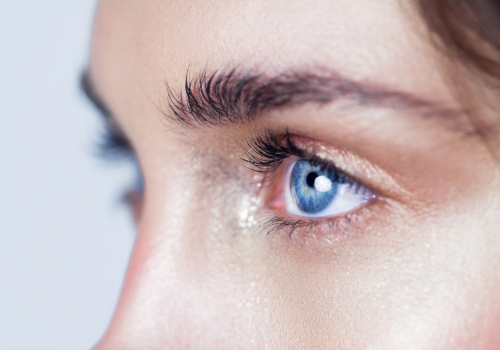
Causes of dry eyes
- Due to the age
- Because we are so focused on the computer screen, television, books ... that we forget to blink, thus preventing tears from being secreted and covering the entire eye.
- In an environment where air conditioning is used, the humidity is low.
- The daily diet is lacking in nutrients, especially vitamin A.
- Due to Lasik surgery to correct myopia or using contact lenses.
- Affected by polluted environment, a lot of sunshine, especially wind and dust in the summer.
Causes of eye pain
- Eyes are over-adjusted, eyes are stretched to the fullest when using computers, televisions ...
- Due to reading books, studying in poor light conditions.
- People with refractive errors such as nearsightedness, astigmatism, farsightedness but do not wear glasses suitable for their eyes when studying, working or having fun.
- The body is tired but still trying to work.
- Due to a lack of nutrients in the diet, or being on a diet, it does not provide enough nutrients for the body to nourish the optic nerve.
- Affected by polluted environment, a lot of sunshine, especially wind and dust in the summer.
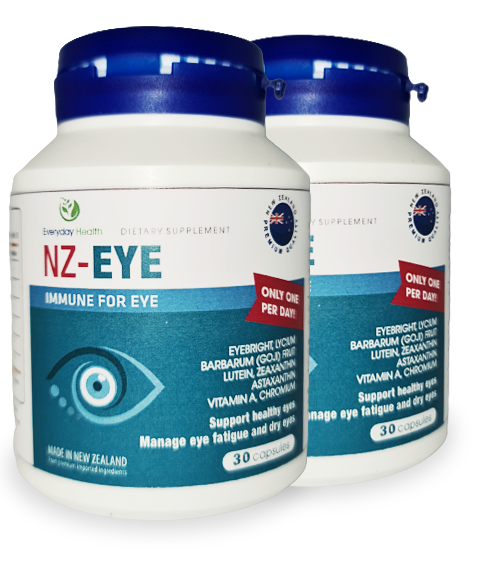
NZ-EYE is a comprehensive and complete formula for those with unhealthy eyes. The product is suitable for all the elderly, children, adults, people with eye diseases or those who want to keep their eyes bright and healthy.
| Amount Per Serving | % Daily Value | |
|---|---|---|
| Eyebright (Euphrasia officinalis) | 600mg | * |
| Lycium barbarum (Goji) fruit extract | 100mg | * |
| Lutein Powder | 20mg | * |
| Zeaxanthin Powder | 2mg | * |
| Astaxanthin Powder | 3mg | * |
| Vitamin A (as beta-carotene) | 1mg | 50% |

Eyebright (Euphrasia officinalis)
Euphrasia officinalis L. is a herb commonly used in folk medicine, mainly to treat eye disorders. Helps prevent inflammation of the mucous membranes and mucous membranes of the eyes because the chemical composition of eyebright has the effect of killing bacteria to treat conjunctivitis, eyelid swelling (blepharitis) and eye fatigue.
Lycium barbarum
Chemical composition analysis. Goji berries contain betaine, amino acids, carotene, vitamin B1, vitamin B2, vitamin C, calcium, phosphorus, iron and some other ingredients. blurred vision, decreased vision.
Goji berries and improve eyesight
The accumulation of excessive oxidative stress can exacerbate damage to retinal tissue. This process is involved in many pathological processes of eye diseases. Such as glaucoma, diabetic retinopathy and ischemic optic neuropathy. Polysaccharides in goji berries protect against oxidative damage in many cells and tissues. On the other hand, goji berries can effectively reduce CoCl2-induced retinal ganglion cell apoptosis. This inhibition generates reactive oxygen species and degrades the mitochondrial membrane. These findings suggest that goji berries may protect retinal ganglion cells from CoCl2-induced apoptosis. By reducing the mitochondrial membrane electrical energy and oxygen response.
Lutein & Zeaxanthin
Lutein and zeaxanthin are the two main components that make up the macula of the eye. This complete construction helps the eye to see everything clearly. Then the eyes do not have to adjust much, avoid eye fatigue, reduce the risk of disease. They are also known as retinal carotenoids.
Research published in the journal Nutrition and Metabolism found that nutrients containing lutein and zeaxanthin increased the density of the macular pigment spectrum in the eyes of the majority of study subjects. Lutein and zeaxanthin protect the eyes from the progression of macular degeneration.
In the eye, the macula plays a very important role in the acquisition and clarity of images, responsible for up to 90% of vision. The macula has the function of color vision and specific, detailed look at the central parts of the image. Lutein and zeaxanthin play a role in creating the yellow color of the macula of the retina, which is the place where light signals are received from which help us see things.
Lutein and zeaxanthin have the effect of absorbing excess energy from sunlight to prevent harmful ultraviolet rays from reaching the eyes. under the light for too long. At the same time, if supplemented with Lutein and Zeaxanthin, it will help your child's eyes see things more easily and clearly. When seeing clearly the image of things, the eyes will not need to adjust much, helping the eyes not to get tired, thereby reducing the risk of myopia due to over-accommodation for a long time.
The foods rich in lutein and zeaxanthin that have been studied most include spinach, turnip greens, broccoli, corn, lettuce, carrots, green beans, eggs...
Astaxanthin
Astaxanthin is a natural carotenoid extracted from the Japanese green microalga Haematococcus Pluvialis with 800 times stronger antioxidant capacity than CoQ10; 6000 times vitamin C helps prevent oxidation that causes aging and damage to eye cells, helping to enhance the ability to regulate and enhance vision. According to experts, Astaxanthin has the strongest antioxidant capacity in nature, has a very small particle size < 600 Dalton, so it can easily penetrate deep into the cell structure, especially the cell structure. eye cells and nerve cells.
Vitamin A
Along with Vitamin B2, vitamin A has long been listed as an essential and extremely important nutrient for eye health. Vitamin A has special significance in the treatment of dry eyes (this group of vitamins plays a role in creating retinal pigment to help the eyes see in low light conditions, if vitamin A deficiency will reduce the ability to see in the dark). is night blindness – the earliest clinical manifestation of dry eye disease).
If you pay a little attention, you will find that it is not difficult to recognize that your eyes are deficient in vitamin A: often blinking, at dusk, often limit running and jumping due to tripping, fear of light, always squinting...
The role of vitamin A in vision has long been undeniable. Accordingly, age-related vision diseases seem to be more severe if combined with vitamin A deficiency.
Age-related macular degeneration is the leading cause of vision loss in people age 50 and older. Progression of the disease distorts central vision, reducing the sharpness needed to be able to see fine details such as reading and driving. The exact cause is still unclear, but substances in oxidative stress are thought to play a role. Smokers and those with a poor diet, lacking in fruits and vegetables, are at a greater risk of developing vision loss in the elderly.